
Paintless Dent Repair vs Traditional Dent Removal
Somebody’s car door, a runaway shopping cart, a summer hailstorm rolling across Northern Virginia: dents find your car no matter how carefully you park. The next question is how to fix it, and the answer is not one size fits all.
Body shops repair dents two very different ways, and choosing the right method affects the price, the timeline, and how factory original your car stays. Here is how Fairfax drivers can tell which repair a dent actually needs.
What is the difference between paintless dent repair and traditional dent removal?
Paintless dent repair, or PDR, massages the metal back into shape from behind the panel using specialized tools, leaving your factory paint untouched. Traditional dent removal reshapes the damaged area with body filler, then sands, primes, and repaints it. PDR is faster and cheaper when the paint is intact and the dent is shallow, while traditional body work handles creases, chipped paint, and larger damage.
The dividing line is almost always the paint. If the finish is unbroken and the metal is not sharply creased, PDR is usually on the table. Once paint cracks or scrapes, refinishing becomes unavoidable.
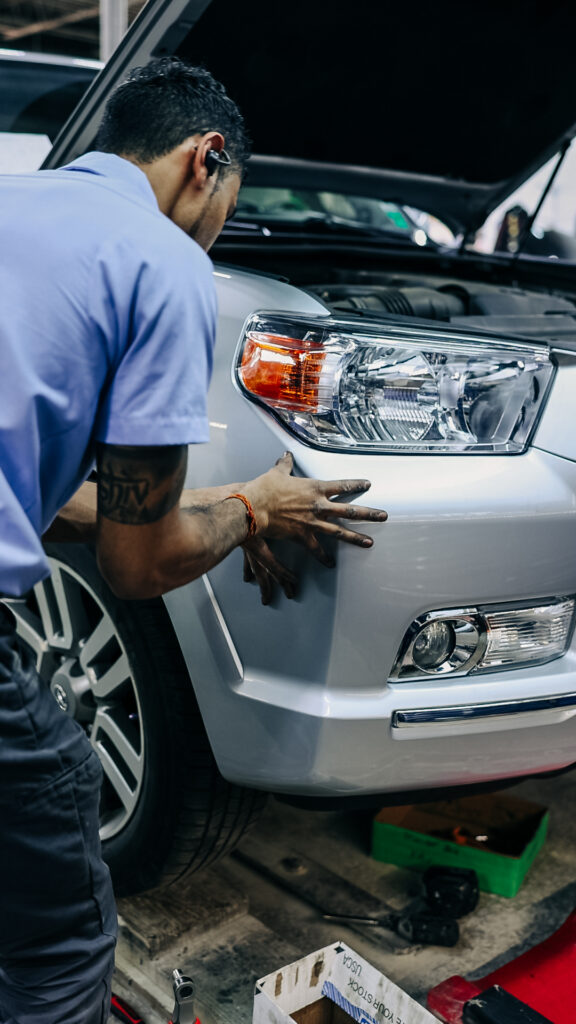
When paintless dent repair is the right call
PDR shines on door dings, hail dents, and soft rounded dents on metal panels where the paint survived. Because the factory finish stays untouched, a well executed repair is essentially undetectable, which matters for resale value and for leased vehicles headed back to inspection. Fairfax parking garages and shopping center lots produce a steady supply of exactly this kind of damage, which keeps PDR technicians busy year round.
It is also the budget and schedule winner. A single small dent typically runs $75 to $400 depending on size and access, and many repairs finish the same day. Prices vary with the dent’s location and depth, since a dent sitting on a body line or near a panel edge takes far more skill to work out cleanly. Aluminum panels, common on newer trucks and premium models, can also be worked with PDR, though they demand more expertise than steel.
When traditional body work is necessary
Once paint is cracked, scraped, or flaking, PDR alone cannot help, because the finish itself needs repair. Sharp creases, stretched metal, large dents, damage along panel edges, and areas with previous body work or old filler all point toward traditional repair as well.
The process is more involved: the technician reshapes the metal, applies filler where needed, sands everything smooth, then primes, paints, and clear coats the panel, often blending color into neighboring panels so the repair disappears. Plastic bumper covers follow their own version of this process. Expect a panel level repair to take two to four days once parts and paint are in motion. Good shops photograph each stage of the work, so ask to see the process if you are curious what your panel went through.
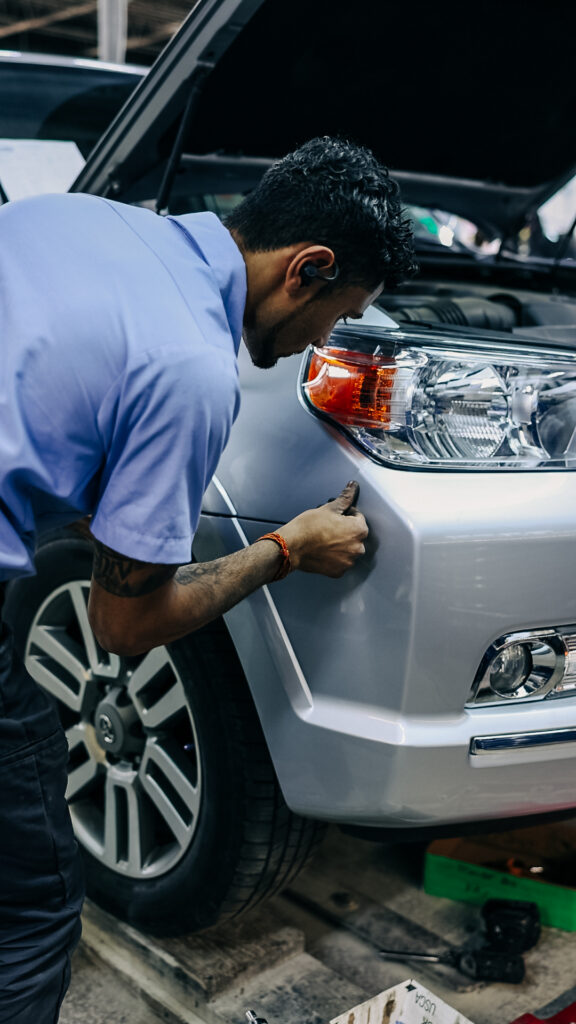
Cost and time, compared honestly
For a comparable small dent, PDR might cost $150 while a conventional repair and respray of the same panel runs $400 to $1,000, mostly because of paint materials and added labor hours. Traditional repairs also mean days in the shop rather than hours, and a repainted panel, even a beautifully matched one, is no longer factory finish. When a dent sits near the line between methods, ask the estimator to price both routes, because seeing the numbers side by side usually settles it.
Hail is where the difference compounds. A roof and hood peppered with twenty small dents can often be fully restored with PDR for far less than repainting multiple panels, which is why insurers frequently prefer PDR on hail claims. Prices vary by vehicle and severity, so have the damage assessed in person before assuming either direction.
How insurance treats dent repairs
Dents from hail and falling objects fall under comprehensive coverage, while dents from collisions fall under collision coverage, each with its own deductible. Comprehensive claims are also generally treated differently than at fault accidents when policies renew, though every insurer handles its own rating decisions.
The deductible drives the decision for small dents. If your deductible is $500 and the PDR estimate is $250, filing a claim makes no sense: pay cash and move on. For widespread hail damage running into the thousands, a claim is usually the right move. An honest shop will price the repair first so you can decide with real numbers in hand. Bundling matters too: if one storm dents the hood and cracks the windshield, a single comprehensive claim can cover both under one deductible.
Bottom Line
Paintless dent repair is the fast, affordable, factory finish option for shallow dents with intact paint, and traditional body work is the right tool once paint damage, creases, or stretched metal enter the picture. The smart move is simply to have the dent evaluated before assuming the worst. Quality Auto Body offers both repair methods in Fairfax and will tell you straight which one your car actually needs. Stop by for an estimate and get the honest answer in minutes.
Related reading: What to Do After a Fender Bender in Fairfax, VA


