
What to Do After a Fender Bender in Fairfax, VA
Between Route 50, Little River Turnpike, and the daily crawl on Interstate 66, Fairfax drivers spend a lot of time inches from someone else’s bumper. Sooner or later a light changes, someone glances at a phone, and you feel that unmistakable thud.
A fender bender rattles you even at five miles per hour, and the decisions you make in the next hour shape how smoothly the claim and the repair go. Here is a calm, step by step playbook to keep in your glovebox.
What should you do immediately after a fender bender?
Check everyone for injuries first, move the vehicles out of traffic if they are drivable, and call 911 if anyone is hurt or the cars cannot move safely. Exchange names, phone numbers, insurance details, and license plate numbers, photograph everything before anyone leaves, and report the crash to your insurance company promptly.
In Virginia, crashes involving injury or significant damage should be reported to police, and even for minor damage a police report gives your claim a neutral record. On busy Fairfax roads, get out of live traffic lanes before you document anything.
Document the scene like an adjuster will read it
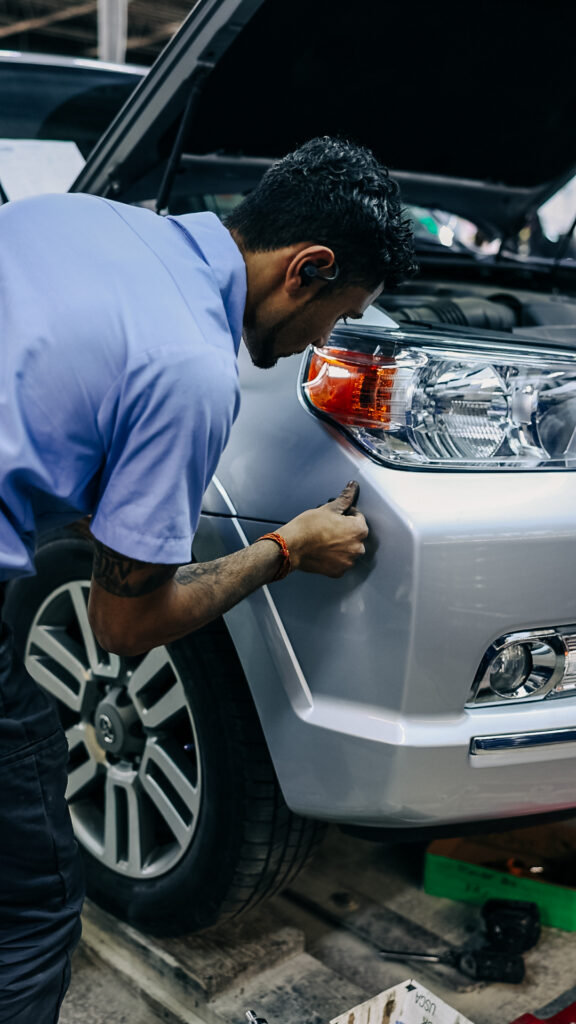
Photos win arguments later. Take wide shots showing both vehicles and their positions, then close ups of every damaged area, both license plates, and the other driver’s insurance card. Capture the surroundings too: skid marks, traffic signals, lane markings, and weather. Note the time and the exact location, such as Route 29 near Fairfax Circle. If the other driver seems agitated, stay polite and brief, and let the photos do the arguing later.
If anyone stopped to help, ask for a name and number, because a neutral witness is worth more than both drivers’ stories combined. Save any dashcam footage right away before it loops and records over itself. Two extra minutes of documentation can save weeks of claim friction. If police respond, note the officer’s name and the report number, since that report becomes the backbone of the claim.
Start the claim without hurting your own case
Notify your insurer promptly, even if the other driver was clearly at fault, and stick to plain facts: where, when, and what happened. Avoid speculating about fault at the scene or on recorded calls. Let the adjusters work from the photos, the police report, and the evidence rather than from anyone’s adrenaline fueled first impression. Virginia is an at fault state, so establishing cleanly what happened matters more here than in states where each policy simply covers its own car.
If the other driver caused the crash, their liability coverage should pay for your repairs with no deductible on your end. If you claim through your own collision coverage, your deductible applies, and your insurer may recover it for you later. For very minor damage, get a repair estimate first, since paying out of pocket occasionally makes more sense than filing a small claim. And if the other driver offers to settle in cash on the spot, decline politely, because roadside handshakes tend to evaporate once hidden damage appears.
You choose the body shop, not the insurance company
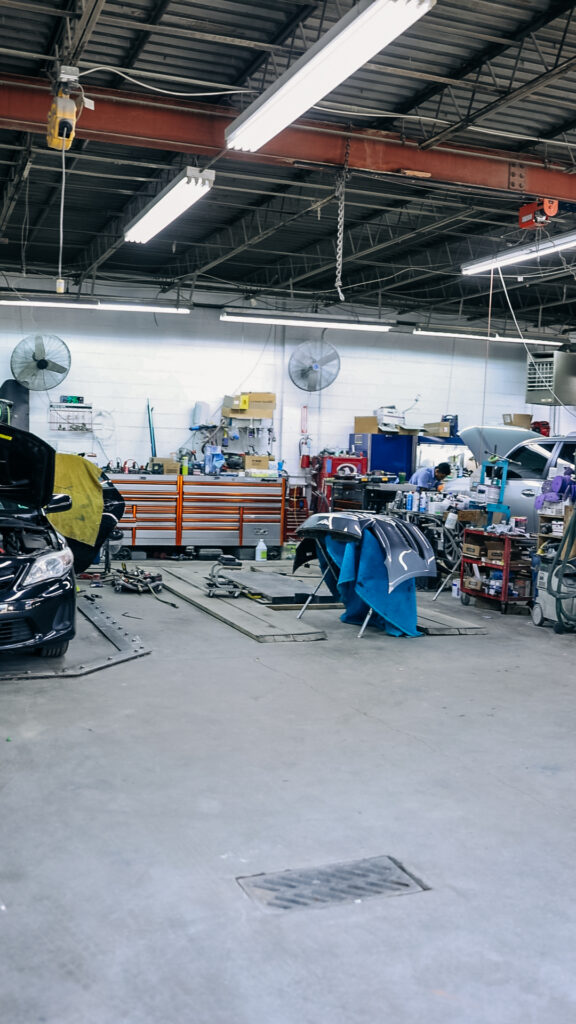
Virginia law puts the choice of repair shop in your hands. Your insurer can recommend shops from its direct repair network, and those recommendations often sound like instructions, but they cannot require you to use a particular shop. Your claim is just as valid at the licensed Fairfax shop you trust.
A quality shop will coordinate directly with any insurer, handle the estimate and supplement process, and document hidden damage properly. Pick the shop based on its work, its warranty, and its reputation, then let it manage the insurance back and forth. That is normal procedure, not a special favor.
Why a small hit still deserves a professional inspection
Modern bumpers are not just plastic and paint. They house parking sensors, radar modules, crash absorbers, and mounting brackets that can break invisibly while the outer cover pops back into shape. A bumper that looks barely scuffed can hide hundreds or even thousands of dollars in damage underneath. Trunk floors, radiator supports, and mounting points can shift in ways that only show up once a technician gets the car on a lift.
There is also your safety technology to consider. Cameras and sensors that power features like automatic emergency braking may need recalibration after even a light impact. A professional estimate is typically free, takes little time, and either buys you peace of mind or catches a real problem while the claim is still open instead of after it closes.
Bottom Line
After a fender bender in Fairfax, the order of operations is simple: safety first, document everything, report the crash, and remember that the repair shop choice is yours under Virginia law. Small collisions hide real damage often enough that a professional inspection is always worth the stop. Quality Auto Body has walked Fairfax drivers through this exact situation for years, and we are glad to look over the damage, write an honest estimate, and deal with the insurance company on your behalf. Come see us before you accept anyone’s shortcut.


