
How Body Shops Match Paint on Modern Factory Finishes
Of all the questions asked across our counter, one comes up more than any other: will the paint match? It is the right question. A structurally perfect repair with paint that reads slightly off in sunlight is a repair everyone notices forever.
Modern factory finishes are layered, metallic, and unforgiving, and matching them is equal parts chemistry, equipment, and craft. Here is what actually happens between the estimate and the moment your car rolls out looking like nothing ever happened.
How do body shops match car paint exactly?
Shops start with the factory paint code, then measure the actual color of your car’s panels with a spectrophotometer, an instrument that reads how the finish reflects light after years of sun and weather. A custom mix is tinted to that reading, sprayed on test cards, checked under multiple light sources, and blended into neighboring panels for a seamless result.
The short version: the code identifies the color family, the instrument finds your car’s version of it, and the painter’s technique makes the repair invisible.
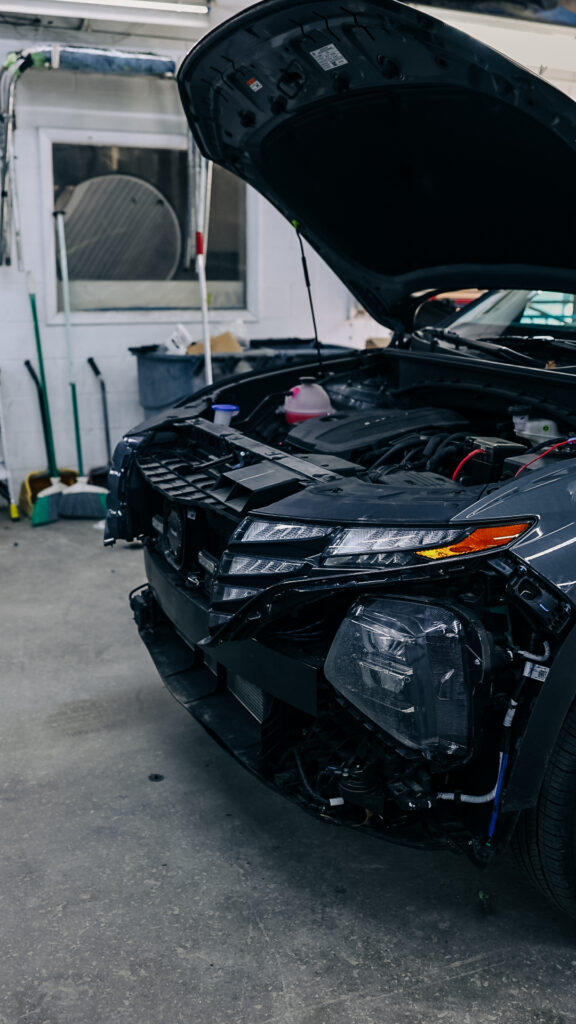
Why the factory code is only a starting point
Every car leaves the factory with a paint code, and every painter will tell you the code is a suggestion. The same code sprayed at different plants, in different batches, by different robots produces measurably different results, which is why paint companies publish multiple alternate formulas for a single code. Age adds another layer, because years of UV exposure shift a finish, and a formula mixed to the original standard would stand out against six year old paint.
There is even variance built in at the factory: plastic bumper covers and steel fenders take paint differently on the assembly line, so many cars are born with a faint front corner difference nobody notices until they look. Matching means matching the car in front of you, not the car as it existed on a spec sheet years ago.
What is actually in a modern factory finish
A modern finish is a stack: corrosion coatings, primer, the color carrying basecoat, and a clear coat that provides the gloss and protection. The basecoat is where matching gets tricky. Metallic colors carry aluminum flakes whose size and orientation change how the color reads at every angle. Pearl colors add mica that shifts hue as you walk around the car, and premium whites are often three stage finishes, a ground coat plus a translucent pearl layer plus clear, where the number of pearl passes visibly changes the color.
Silver remains the hardest common color to match because it is nearly all flake, and any difference in application shows. Matte and satin finishes are their own discipline, since their look lives in the clear coat texture and they cannot be spot polished. This stack is also why touch up pens disappoint: color without the layered structure never reads right.
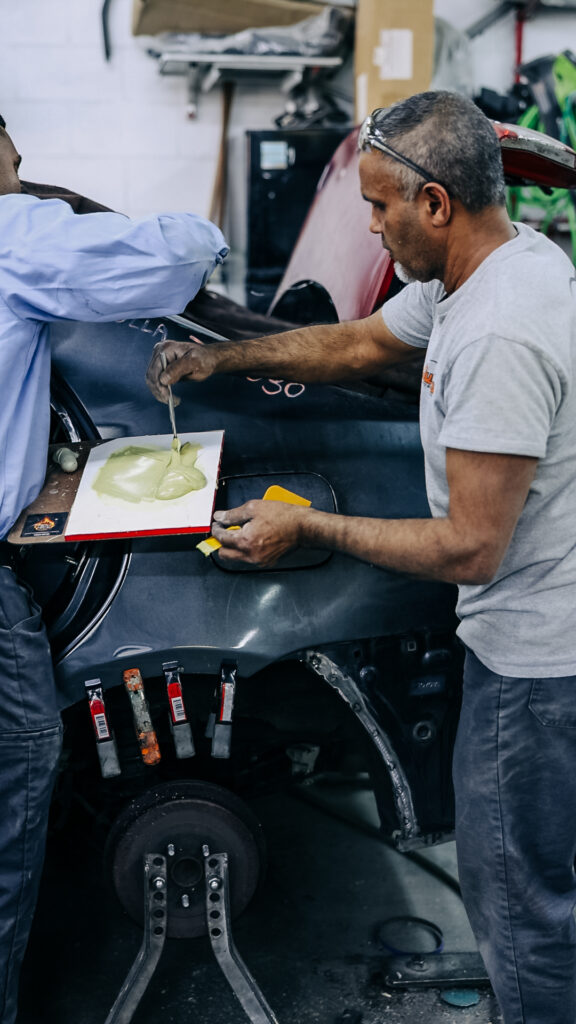
Blending: why the shop paints panels that were not hit
The human eye is remarkable at comparing colors across a hard edge and terrible at detecting a gradual transition. Painters exploit this by blending, fading the new basecoat into the adjacent panels a few inches or more, then clearing the full panels to a natural edge. The repair does not stop at the damaged fender because a panel to panel color break, even a very close one, is exactly what eyes catch in a parking lot.
So when your estimate lists blend time on a door that was never touched, that is not padding. It is the difference between a repair you can find and one you cannot. Clear coat has its own rule: it must run to a panel edge, because clear that stops mid panel leaves a visible line and fails early. Insurers know blending is standard procedure and pay for it on properly written estimates.
Booth, bake, and the checks before you see the car
Color work happens in a downdraft spray booth, where filtered airflow keeps dust out of the finish and controlled temperature lets each coat flash properly. After spraying, the finish is baked to cure, then inspected the way customers actually see cars: under corrected daylight lamps, then in real sunlight, at multiple angles to check how the metallic travels as the view shifts.
The painter is also matching texture, since factory paint carries a subtle orange peel, and a repair that is glassier than the rest of the car reads as wrong even when the color is perfect. Final polish, a last inspection, and a written warranty on the paint work close the job. Ask any shop how they verify color before delivery, and listen for specifics like test cards and sunlight checks.
Bottom Line
Paint matching on modern finishes is real science backed by real craft: measured color instead of assumed color, blended transitions instead of hard edges, and verification under the same light you will see in your driveway. Quality Auto Body matches metallics, pearls, and three stage finishes for Fairfax drivers every week, and we stand behind the result in writing. If you want to know exactly what your car’s finish needs, bring it by and we will show you rather than tell you.
Related reading: Who Pays for the Rental Car While Yours Is in the Shop, Diminished Value Claims in Virginia: Money Most Drivers Miss


