
Why Your Car Needs ADAS Calibration After a Collision
Your car has been watching the road for you longer than you think. Automatic emergency braking, lane keeping assist, adaptive cruise, blind spot monitoring: on most vehicles built in the last decade, a network of cameras and radar units works every mile, and nowhere harder than in stop and go traffic on Interstate 66 or Route 50.
After a collision, those electronic eyes cannot be trusted until they are aimed correctly again. That process is ADAS calibration, it is not optional, and it is quietly becoming the most important step in modern collision repair. Here is what every Fairfax driver should understand about it.
What is ADAS calibration?
ADAS calibration is the precise realignment of the cameras, radar, and sensors that power advanced driver assistance systems like automatic emergency braking and lane keeping assist. After a collision, a windshield replacement, or suspension work, those sensors must be reset to exact factory aim using targets, scan tools, and manufacturer procedures.
The tolerances are unforgiving. A camera or radar unit that ends up a single degree off aim is pointing roughly five feet away from its intended target at the length of a football field, which is the difference between a system that brakes for a stopped car and one that never sees it.
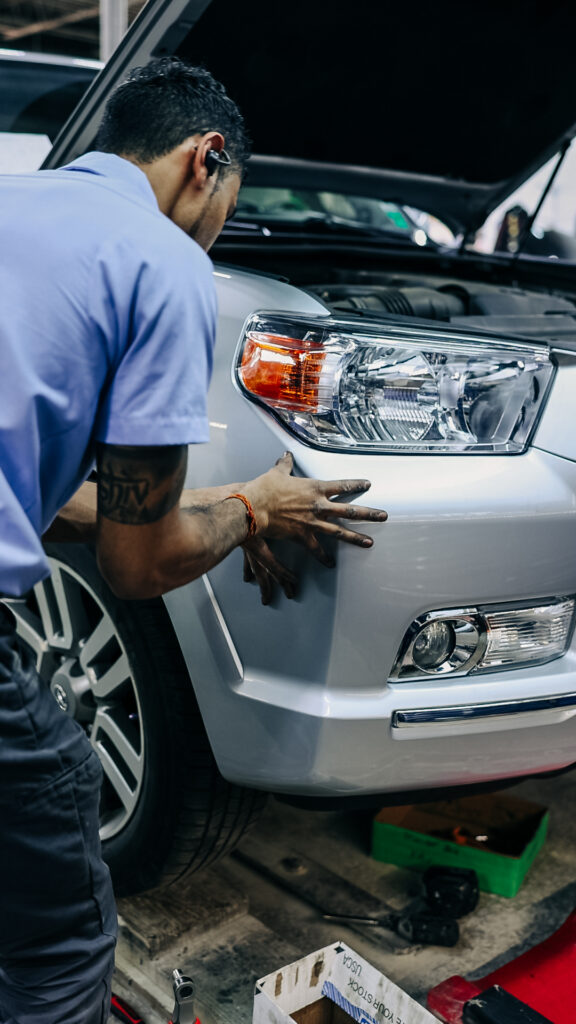
Where these sensors actually live on your car
The sensors sit exactly where cars get hit. A forward camera watches the road from behind the windshield glass. Radar units hide behind the front emblem, in the grille, and in the corners of both bumpers. Ultrasonic parking sensors ring the bumper covers, blind spot radar sits behind the rear quarter panels, and surround view cameras live in the mirrors and door handles.
That geography changes what a minor repair means. Replacing a bumper cover used to be cosmetic work, and now it disturbs the mounting and surroundings of multiple sensors. Even refinishing matters, because too much paint over a radar cover can distort the signal passing through it. A shop that treats a bumper as just plastic is a shop working from a decade old playbook.
Static, dynamic, or both: how calibration works
Static calibration happens in the shop. The vehicle sits on a level floor at exact measured distances from manufacturer specified targets, and a scan tool walks each sensor through its alignment routine while the technician verifies the results. Lighting, floor slope, and even reflections in the workspace matter, which is why this is a controlled procedure rather than a parking lot task.
Dynamic calibration happens on the road. With the scan tool connected, a technician drives a prescribed route at set speeds while the system relearns lane lines and traffic ahead. Many vehicles require static and dynamic procedures together, in a specific order, and the manufacturer publishes exactly which repairs trigger which calibrations. The right answer is never a guess, it is a lookup.
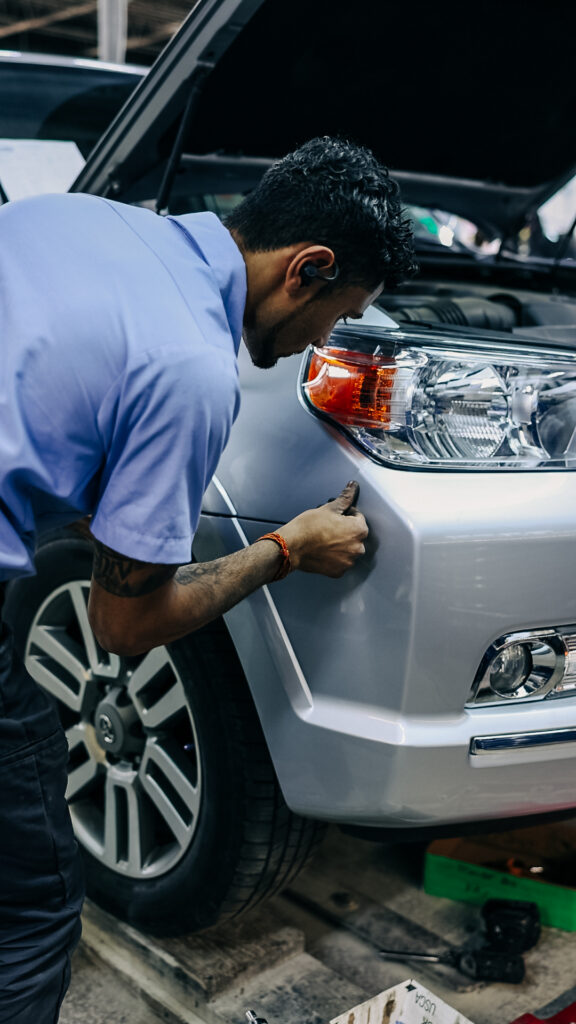
When your car needs calibration
Calibration is required after more repairs than most drivers expect: windshield replacement, bumper removal or replacement, grille and emblem work, mirror replacement, tailgate and quarter panel repairs near rear radar, any suspension or alignment work, and any airbag deployment. If a repair touched the panel a sensor mounts to or sees through, calibration belongs on the estimate.
The trigger list keeps growing as the technology spreads downmarket, and it now includes plenty of cars whose owners do not think of them as tech heavy. A 2019 commuter sedan with basic emergency braking has the same calibration needs as a luxury SUV. The model year, not the badge, is what decides, and anything built in the last several years almost certainly qualifies.
What happens if you skip it
Skipping calibration is dangerous precisely because nothing feels wrong. A miscalibrated system usually throws no warning light and drives normally, right up until it misjudges the distance to a stopped car or reads the wrong lane line. The failure only shows up at the exact moment the system exists for, which is the worst possible time to discover it.
There is no cost argument for skipping it either. Calibration documented to manufacturer procedure is a normal, payable part of a proper insurance claim, typically adding a modest amount to the repair rather than transforming it. What should concern you is a repair estimate that includes sensor area work with no calibration line at all, because that estimate is telling you the step is being skipped.
Bottom Line
If your car took a hit, its sensors need to prove they still see straight, and the only proof is a documented calibration to factory specification. Ask any shop you consider how calibration will be handled, on which equipment, and whether you get the report. Quality Auto Body performs ADAS calibration as part of collision repair in Fairfax, verifies every system before the car leaves, and includes the documentation with your paperwork. Your safety systems earned a fighting chance to work, and we make sure they get it.
Related reading: OEM vs Aftermarket Parts: What Goes on Your Car After a Crash


