
Does Your Insurance Choose the Body Shop, or Do You
It is one of the most common moments in any claim call. The adjuster says, “We have an approved shop nearby that can see your car this week,” and it sounds less like a suggestion than an instruction. Most drivers assume they have to say yes. The assumption survives because most people have never read their policy and never needed to.
You do not. Virginia law is clear on this point, and knowing it changes the balance of the entire claim. Here is how shop choice really works for Fairfax drivers, and how to handle the pressure gracefully.
Can your insurance company make you use a specific body shop?
No. In Virginia, the choice of repair shop belongs to you, the vehicle owner. Insurance companies may recommend shops from their direct repair networks, but they cannot require you to use one, and your claim remains fully valid at the licensed shop you choose.
This applies whether you are claiming through your own policy or through the at fault driver’s insurer. The company owes payment for a proper repair. It does not get to dictate who performs it.
What a preferred shop actually means
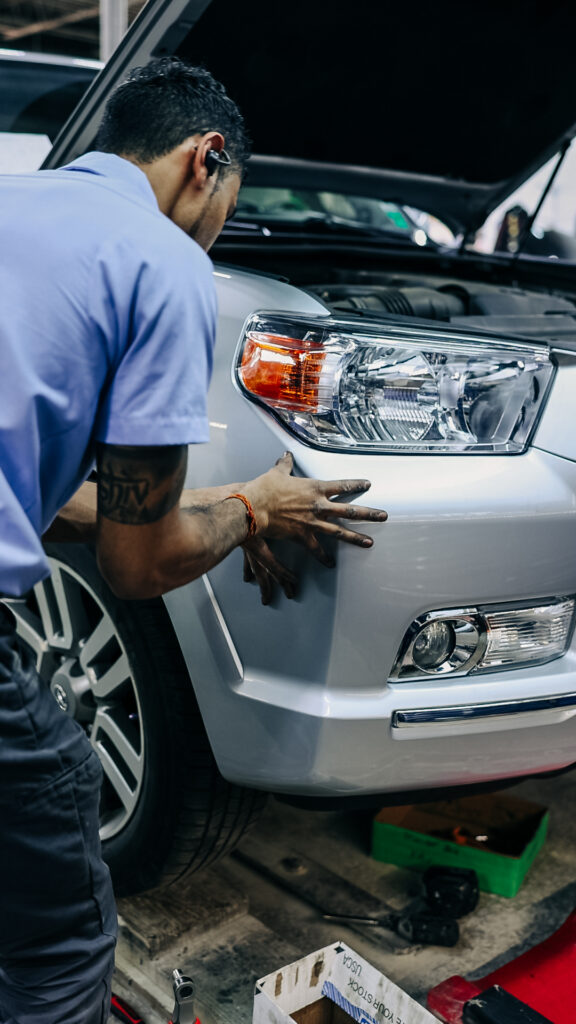
Direct repair programs are business arrangements. A shop agrees to the insurer’s pricing, parts preferences, and processes, and in exchange the insurer sends volume through its doors. That can genuinely be convenient: photos, estimates, and billing flow through established channels with less friction for everyone involved. There is nothing inherently shady about the arrangement, and many drivers use network shops happily every day.
But understand what the recommendation optimizes for. The network exists to control the insurer’s costs and cycle times. Plenty of network shops do fine work, yet the shop’s obligations in that arrangement run partly toward the insurer. When you choose your own shop, its only customer in the transaction is you. That difference in loyalty is invisible on the surface and decisive when a judgment call arises over a part, a procedure, or a shortcut.
What steering sounds like, and how to respond
Steering is the industry term for nudging you away from your chosen shop, and it follows familiar scripts: “We cannot guarantee their work.” “Repairs there may take longer.” “You might have to pay the difference.” These lines are designed to create doubt in about fifteen seconds. Adjusters handle hundreds of claims a month, and the script survives because it works on people who do not know their rights.
Here is the reality: workmanship warranties come from shops, not insurers, and reputable Fairfax shops guarantee their own repairs in writing. Timelines depend on parts and damage, not network status. A calm response works fine: “I have chosen my shop. Please send the assignment there.” Repeat it once if needed. You are exercising a right, not asking a favor. If pressure continues after you have stated your choice, note the representative’s name and ask for the objection in writing, which usually ends the conversation.
How the claim works at the shop you choose
The process is nearly identical either way. You file the claim, your shop writes an estimate, and the insurer reviews it or sends an adjuster. When teardown reveals hidden damage, which is common, the shop documents it and negotiates a supplement directly with the insurer. Your deductible stays exactly the same no matter which shop does the work. Expect the same paperwork, the same rental coordination, and the same payment flow you would see anywhere else.
A good shop carries that weight for you: photographing everything, justifying procedures with manufacturer documentation, and pushing back when an adjuster wants shortcuts. That advocacy is precisely why choosing your own shop matters. You get a repair built to the car’s standard, not to a cost target.
Why this choice follows you long after the claim
The insurance file closes in weeks. The repair rides with the car for years. Paint match, panel alignment, structural integrity, and properly calibrated safety systems all trace back to who did the work and how carefully. Corners cut invisibly today become the rattle, the rust line, or the reduced trade in value later. A documented, quality repair also supports any diminished value conversation down the road, something Virginia drivers can pursue when someone else damages their car.
You will also sign the final repair authorization and drive the result every single day. Pick the shop whose work, warranty, and reputation you trust, and treat the insurer’s list as what it legally is: a suggestion you are free to decline.
Bottom Line
In Virginia, insurers recommend and drivers decide, and no adjuster can require you to use a network shop. Choose based on certifications, warranty, and reputation, then let your shop handle the estimates and supplements with the insurance company. Quality Auto Body works with every major insurer on behalf of Fairfax drivers and puts every repair in writing. If a claim is in your future, we would be glad to be the shop you name on that call.
Related reading: How Much Does Collision Repair Cost in Fairfax, VA, How to Choose an Auto Body Shop in Fairfax, VA


