
Deer Season Collision Prep for Northern Virginia Drivers
Every fall, body shops across Northern Virginia watch the same wave roll in. The phone starts ringing in October, the tow trucks arrive with crushed hoods and shattered headlamps, and the story is always the same: it came out of nowhere.
Fairfax County carries one of the densest suburban deer populations in the state, and its parkways thread directly through their habitat. Deer collisions here are not bad luck, they are a season, and you can prepare for a season. Here is how.
When are deer collisions most common in Virginia?
October through December, with the peak in November during the fall breeding season. Most strikes happen between dusk and midnight and again around dawn, exactly when autumn commutes run dark. Virginia consistently ranks among the higher risk states in the country for deer strikes, and insurers process tens of thousands of animal collision claims here every year.
The seasonal spike is dramatic, with fall claims running several times higher than summer. If you commute at dawn or dusk anywhere near wooded corridors, the next three months are when your odds change.
Why fall flips the switch
Two forces collide in November. The first is biology: during the rut, bucks abandon all caution and chase does across roads at full speed, day or night. The second is the calendar: as daylight shrinks, ordinary commutes shift into the dusk and dawn windows when deer naturally move. The most dangerous hour of the year is a dark November evening commute, and Fairfax has a million of them.
Location matters just as much. Fairfax County Parkway, Braddock Road, Route 123 near the reservoirs, and the roads threading Burke Lake and the stream valley parks all run through prime habitat. Suburban deer face no hunting pressure and enjoy well fed landscaping, so populations thrive precisely where the traffic is. Anywhere trees meet pavement, assume company.
Driving habits that actually prevent strikes
Slow down at dusk and dawn near wooded stretches, and use high beams whenever there is no oncoming traffic, scanning the shoulders for the eye shine that shows up long before the deer does. When you see one deer, expect more, because they travel in groups and the second or third animal is the one that gets hit. Deer whistles on bumpers have never shown convincing evidence, so treat them as decoration, not protection.
If a strike becomes unavoidable, the rule that protects you is simple: brake hard, stay in your lane, and do not swerve. Swerving is how a survivable deer strike becomes a head on collision, a rollover, or a tree. Grip the wheel, brake firmly, and let off just before impact if you can, which drops the nose less and helps keep the animal from coming over the hood.
The insurance wrinkle every driver should know
Hitting a deer is a comprehensive claim, not a collision claim. Comprehensive covers animal strikes, usually carries a lower deductible, and is generally treated as a not at fault event on your record. But here is the asymmetry that matters: swerve to miss the deer and hit a tree, a guardrail, or another car, and you have a collision claim instead, with your collision deductible and fault in the mix. The insurance system quietly agrees with the safety experts, and the deer is the cheapest thing you can hit.
After a strike, pull over safely, use your hazards, and never approach the animal, since an injured deer is dangerous. Call police if the deer blocks traffic or the damage is significant, photograph everything, and report the claim promptly. A police report strengthens larger claims.
What deer strikes do to modern cars
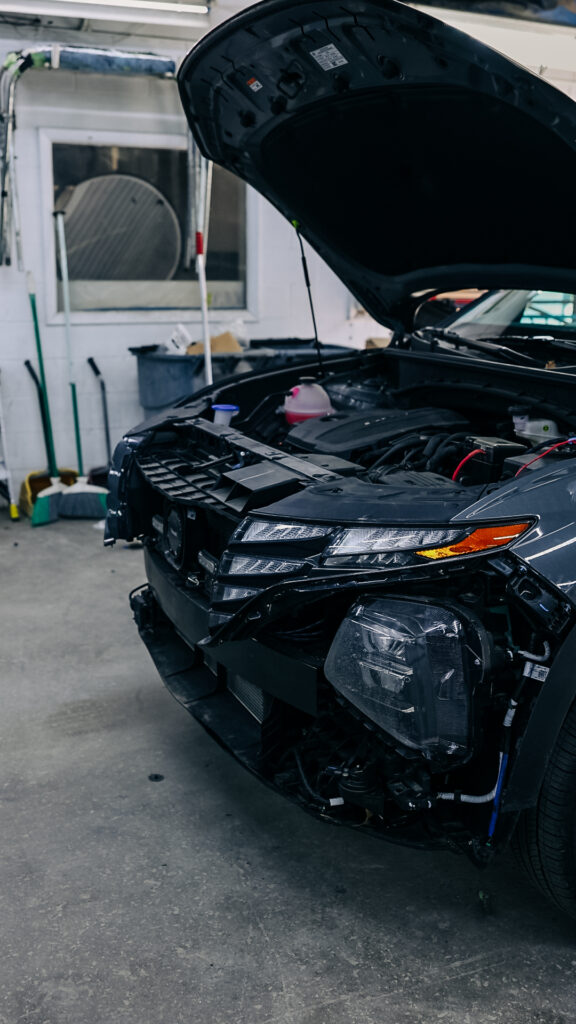
A deer strike concentrates damage exactly where modern cars keep their most expensive equipment: hoods, grilles, bumpers, headlamps, and the radiator and condenser stack behind them. LED headlamp assemblies alone frequently run $800 to $2,000 each, and the radar and camera sensors living in the grille and windshield mean many deer strikes require ADAS calibration on top of the visible repair.
Hidden damage is the pattern to respect. A car that looks lightly scuffed can have a cracked condenser, a leaking radiator, or shifted supports, and cooling system leaks in particular can total an engine if you keep driving. If you see fluid under the car, steam, or a temperature warning, stop and call for a tow. Either way, get a professional inspection while the claim is open rather than after something fails in January.
Bottom Line
You cannot control the deer, but you can control your speed at dusk, your refusal to swerve, and how quickly the damage gets inspected afterward. Respect the season from October through December and your odds improve dramatically. If a deer finds your car anyway, Quality Auto Body handles the comprehensive claim, the hidden damage hunt, and the ADAS calibration for Fairfax drivers every fall. Get the car looked at within a day or two of the strike, and we will have you back on the road before the rut is over.
Related reading: our collision repair services, How Body Shops Match Paint on Modern Factory Finishes, Frame Damage Explained: What Bent Structure Really Means


